
Medical Weight Loss
What If The Problem
Was Never
What You Were Eating?
If you have been eating better, trying harder, and still not seeing the progress you expected, it may not be a willpower problem. At Saltwater Wellness, we take the time to understand what your body has been struggling with and build a plan that actually fits you.
GLP-1 Therapy
Metabolic Testing
Hormone Optimization
Thyroid Assessment
Insulin Resistance
Semaglutide
Appetite Regulation
Cortisol Balancing
Nutritional Guidance
Provider-Led Monitoring
Inflammation Reduction
GLP-1 Therapy
Metabolic Testing
Hormone Optimization
Thyroid Assessment
Insulin Resistance
Semaglutide
Appetite Regulation
Cortisol Balancing
Nutritional Guidance
Provider-Led Monitoring
Inflammation Reduction
Safe & Effective Treatment
What Is Medical Weight Loss?
Medical weight loss is a personalized, clinically guided approach to weight management that looks beyond calories alone. Instead of handing you a generic plan and hoping it works, we evaluate the factors that may be making weight loss harder for your body.
That can include insulin resistance, thyroid dysfunction, hormone imbalance, chronic stress, inflammation, appetite dysregulation, and metabolic slowdown.
I have experienced or am currently dealing with:
- Weight gain despite eating well
- Intense cravings and hunger
- Belly fat that won't respond
- Slow metabolism feeling
- Exhaustion even after full sleep
- Weight that returns after loss
- Told my labs are "normal"
- Mood swings and brain fog
If you checked even two of these, there's almost certainly a clinical reason worth investigating.

The Science Behind It
Why Is Your Body
Holding Onto Weight?

Insulin Resistance
When your cells stop responding properly to insulin, your body produces more of it. High insulin signals your body to store fat rather than burn it, making weight loss extremely difficult regardless of how little you eat. This is one of the most commonly missed contributors to stubborn weight.

Thyroid Dysfunction
Your thyroid controls your metabolism. Even mild underactivity (hypothyroidism) can slow your metabolism by 20 to 40 percent, causing weight gain, fatigue, and cold sensitivity. Standard thyroid tests often miss subclinical dysfunction. We test more comprehensively.

Cortisol Imbalance
Chronic stress keeps cortisol elevated for long periods. High cortisol promotes fat storage, particularly around the abdomen, increases appetite, drives sugar cravings, and disrupts sleep. Managing cortisol is not optional when it comes to sustainable weight loss.
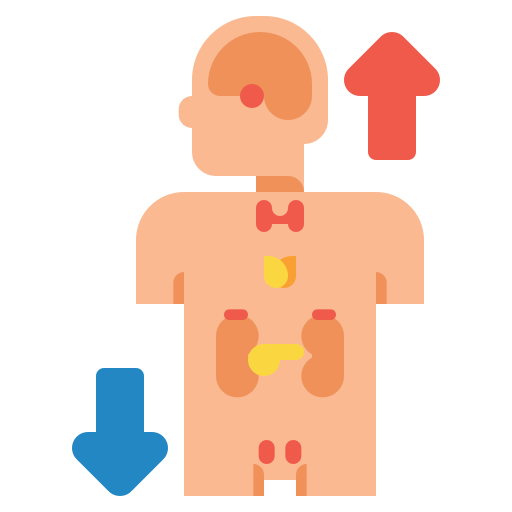
Hormonal Imbalances
Estrogen, progesterone, and testosterone all influence where your body stores fat and how easily it burns it. Low testosterone in men and hormonal fluctuations during perimenopause and menopause in women frequently cause significant, unexplained weight changes that diet alone cannot fix.

Chronic Inflammation
Systemic inflammation disrupts leptin and ghrelin, the hormones that control hunger and fullness signals. When these are impaired, your brain doesn’t accurately register that you’re full, making overeating feel biologically unavoidable. Reducing inflammation can meaningfully restore normal appetite regulation.

Sleep Disruption
Poor sleep increases ghrelin (hunger hormone) and decreases leptin (satiety hormone), effectively making you hungrier and less satisfied after eating. Research consistently shows that sleep-deprived individuals consume significantly more calories and store more fat, independent of their actual dietary choices.
Ready to Finally Know What's Actually Going On?
One comprehensive evaluation can reveal what years of guessing hasn’t. Most patients leave their first visit with more answers than they’ve gotten in years of trying on their own.
What Happens After
You Book?
A straightforward, medically guided process from your first visit to lasting results.
Your First Visit: The Full Picture
We spend real time with you. We review your full health history, discuss everything you've already tried, order comprehensive labs, and listen to what you want your life to look like. You leave with a plan, not a pamphlet.
Lab Results: Identifying Your Blockers
Once your labs return, we review them with you in detail. We identify exactly which biological factors are making weight loss harder for you and explain what they mean in plain language. No medical jargon, no overwhelm.
Your Custom Protocol Begins
Based on your labs and goals, we build your personalized plan. This may include GLP-1 medications, hormone support, nutritional guidance, and lifestyle strategies. Everything is explained clearly and started at a pace that's right for your body.
Ongoing Check-Ins & Adjustments
We monitor your progress regularly, recheck labs as needed, and adjust your protocol as your body responds. You are never left guessing or going it alone. Results are tracked and celebrated together.
Lost 22 lbs
in 4 months after identifying thyroid dysfunction and starting a personalized protocol
Patient result. Individual results vary.
More Energy
reported by patients within the first 4 to 6 weeks of hormone and metabolic optimization
Based on patient-reported outcomes.
Real Answers
after years of being told labs were “normal” and weight issues were just a lifestyle problem
This is the most common thing we hear at first visits.
The Real Reason Clients
Choose Salt Water Wellness
Typical Diet Program
- Root-cause lab testing
- Hormone evaluation
- GLP-1 medication access
- Licensed medical provider
- Protocol adjustments over time
- Individualized plan
- Addresses underlying causes
- Direct provider access
Saltwater Wellness
- Root-cause lab testing (Always)
- Hormone evaluation (Every patient)
- GLP-1 medication access (When appropriate)
- Licensed medical provider (Your NP, every visit)
- Protocol adjustments over time (Ongiong)
- Individualized plan (Tailored to you)
- Addresses underlying causes (Core Focus)
- Direct provider access (Always)
Your Questions,
Answered Honestly.
We believe informed patients make the best decisions. Here are the questions we hear most often, answered without fluff.
Still have questions?
Call us directly or send a message. We’re happy to talk through whether this is right for you before you ever book an appointment.
Yes, when they are the right fit for you. GLP-1 medications are some of the most effective weight loss tools available right now, and we prescribe them when your health history and labs support it. We don't hand out prescriptions at the first visit. We evaluate you properly first, and if GLP-1 therapy makes sense for your situation, we build it into your protocol and monitor you closely throughout.
Because we actually look for the reason nothing has worked. Most programs hand you a meal plan and wish you luck. We run comprehensive labs, check your hormones, thyroid, insulin levels, and inflammation markers, and find the specific biological factors that have been working against you. When you treat the cause, not just the symptom, the results follow.
This is one of the most honest questions you can ask, and you deserve an honest answer. Some people do regain weight after stopping medication if nothing else has changed. That's exactly why we focus on fixing the underlying issues at the same time, so your body is in a better place to maintain results when treatment winds down. We build a long-term strategy with every single patient, not just a short-term fix.
Most patients notice their appetite changing and their energy improving within the first two to four weeks. Visible weight loss typically becomes noticeable between weeks four and eight. Everyone responds differently depending on what's going on underneath, and we track your progress at every visit so we can adjust if something isn't moving the way it should be.
No. We don't do rigid meal plans, calorie counting obsession, or programs that make you feel like a failure the moment life gets busy. We build something sustainable around your actual life, your schedule, your food preferences, and your body. The goal is results you can maintain, not a crash followed by a rebound.
No. There is no minimum weight, no BMI cutoff, and no threshold you have to hit before we'll take you seriously. If you are struggling with your weight and it is affecting your quality of life, that is enough of a reason to come in. We have patients across a wide range of starting points and every single one of them deserves the same level of care and attention. The first step is just a conversation.