How Are HRT and Bone Health Connected After Menopause Begins?
Saltwater Wellness
|
November 8, 2026
|
10 mins read
HORMONE REPLACEMENT THERAPY
Table of Contents
- 1. What Changes Inside Bones During Menopause?
- 2. HRT and Bone Health: Where Estrogen Fits In
- 3. What Do Osteopenia and Osteoporosis Mean?
- 4. When Should You Ask About a Bone Density Test?
- 5. How Do Hormone Benefits Compare With the Risks?
- 6. Daily Habits That Help Protect Bone Strength
- 7. Making Sense of Your Results and Next Steps
- 8. Frequently Asked Questions
- 9. Looking After Your Bones for the Long Term
You may notice hot flashes or changes in your periods as menopause approaches. But bone loss is harder to notice. Your bones can grow weaker without causing pain, so how can you tell whether they need attention?
HRT and bone health are linked through estrogen, a hormone that helps the body maintain strong bones. Hormone replacement therapy (HRT) can slow bone loss for some people, yet it is not the best choice for everyone. This guide explains the changes, what testing can show, and how to compare options. For background on clinical care, see Saltwater Wellness’s hormone replacement therapy services.
1. What Changes Inside Bones During Menopause?
Bone is living tissue, even though it feels solid and still. Your body breaks down old bone and builds new tissue throughout life. This cycle is called bone remodeling. Bone stays strong when the two parts of that cycle remain in balance.
Estrogen helps control how fast bone is removed. During perimenopause, the years leading up to menopause, estrogen levels can rise and fall. Periods may become less regular. Natural menopause is reached after 12 months without a period when no other cause explains the change.
As estrogen falls after menopause, bone may break down faster than it is replaced. Bone loss can be especially rapid during the first years after the final period. Age, family history, smoking, some illnesses, and certain medicines can add to the risk.
Most people cannot feel their bone density changing. A broken bone may be the first clear sign of fragile bones. Some fractures follow major accidents; others happen after a small fall or minor strain. That is why preventing fractures matters more than simply getting a better test score.
Discussing HRT and bone health early can help you learn whether you need testing, lifestyle changes, or a closer look at your risk. Having no symptoms does not always mean your bones are healthy.
2. HRT and Bone Health: Where Estrogen Fits In
Systemic hormone therapy adds estrogen to the body through a prescribed product, such as a patch, tablet, gel, or spray. Systemic means the hormone enters the bloodstream and acts beyond one small area. Estrogen can slow the rate at which bone is broken down.
According to The Menopause Society’s 2022 hormone therapy position statement, hormone therapy has been shown to reduce bone loss and the risk of fractures. It can also ease hot flashes and night sweats in eligible patients. The benefits and risks depend on age, health history, treatment type, and when therapy begins.
That is the key connection between HRT and bone health. Hormone therapy may protect bone while treating bothersome menopause symptoms. But a benefit to bone does not mean every person should take hormones to prevent osteoporosis.
There is also an important difference between systemic and local treatments. Low-dose vaginal estrogen mainly treats vaginal and related urinary symptoms. It is not used to protect bone because its effects are mostly local. Ask your clinician which kind of estrogen is being discussed.
People with a uterus generally need a progestogen alongside systemic estrogen. This medicine protects the lining of the uterus from excess growth. Progesterone is one type of progestogen; progestins are synthetic forms. The right plan depends on your health history.
Bone protection can lessen after systemic hormone therapy stops. If treatment ends, ask how your bone health will be managed afterward rather than assuming its effects will last indefinitely.
3. What Do Osteopenia and Osteoporosis Mean?
Bone mineral density describes how much mineral is present in a measured part of bone. It helps estimate strength, but it does not tell the whole story. Balance, past fractures, and the likelihood of a fall also affect your risk.
Osteopenia means bone density is below the usual range but has not reached the threshold for osteoporosis. Osteoporosis means bones are more fragile and may break more easily. Neither condition always causes pain or noticeable symptoms.
A scan often reports a T-score. This number compares your bone density with the average for a healthy young adult. For postmenopausal women, clinicians usually interpret results this way:
| T-score | Common interpretation |
|---|---|
| -1.0 or higher | Normal bone density |
| Below -1.0 but above -2.5 | Low bone density, or osteopenia |
| -2.5 or lower | Osteoporosis range |
According to the National Institutes of Health guide to bone density test results, lower T-scores generally mean a higher chance of fracture. Yet a score is not a diagnosis of every possible cause of weak bone.
For example, two people may have similar scores but different risks. One may have fallen several times or broken a wrist after a small fall. The other may have no such history. Doctors use the full picture when discussing HRT and bone health or other treatments.
A scan may also report a Z-score, which compares bone density with people of a similar age and sex. It is used more often for younger adults. Ask which score matters for your situation.
4. When Should You Ask About a Bone Density Test?
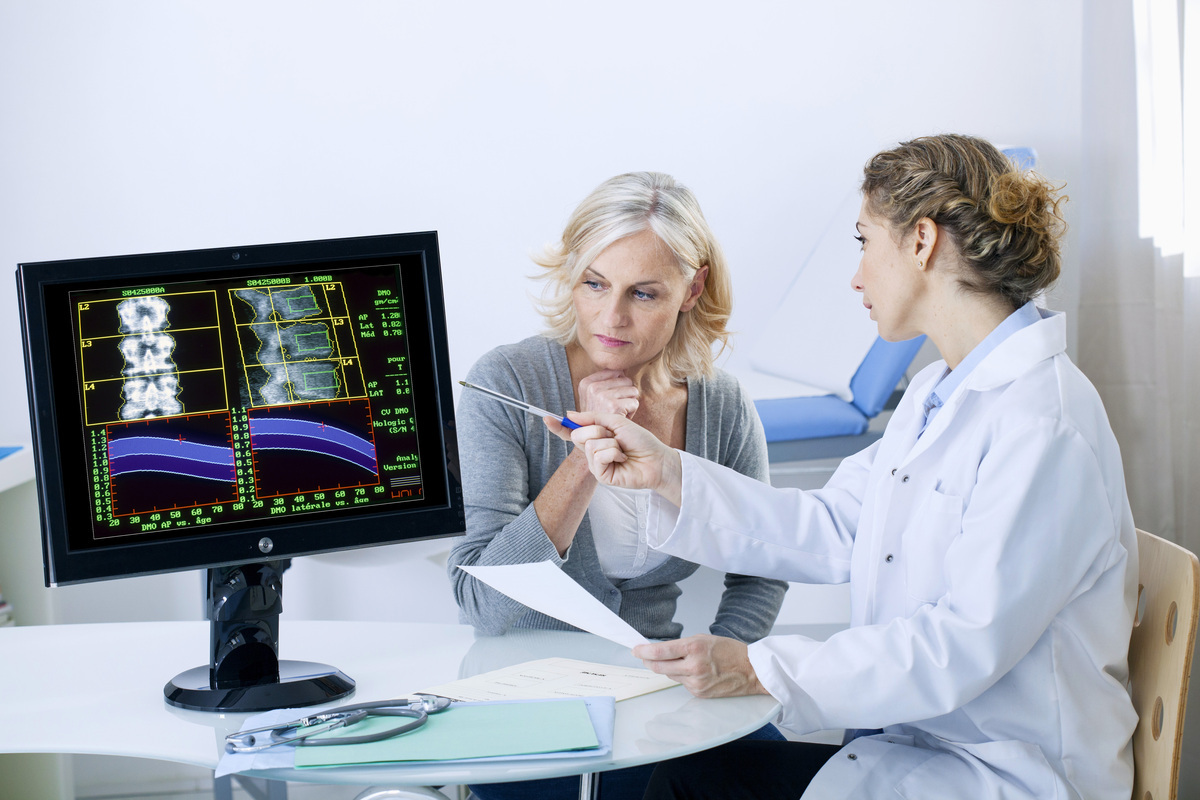
A bone density scan is usually called dual-energy X-ray absorptiometry (DXA). It uses a small amount of X-ray energy to measure bone mineral density, often at the hip and lower spine. You may also see the spelling DEXA. Both refer to the same type of scan.
According to the American College of Obstetricians and Gynecologists’ guidance on osteoporosis, routine bone density screening is recommended for women age 65 and older. Postmenopausal women younger than 65 may also need a scan when their fracture risk is high enough. A clinician can assess the need for testing rather than using age alone.
Mention these risk factors during a visit:
An earlier fracture after a minor fall: This can be a clue that bones have become fragile.
A parent who broke a hip: Family history may raise your risk.
Menopause at a younger age: More years with low estrogen can affect bone strength.
Long-term steroid medicine: Some oral steroids can weaken bone over time.
Low body weight or smoking: Both may increase the chance of bone loss.
Falls or poor balance: These raise the risk of an injury even when a scan does not show severe bone loss.
Some clinicians use the Fracture Risk Assessment Tool (FRAX). It estimates the chance of certain fractures over the next ten years using health information, sometimes with a bone density result. The estimate helps guide care; it is not a prediction of what will happen to you.
Bone density results can guide a conversation about HRT and bone health, but they do not choose a treatment for you. If your score is low, ask whether another illness or medicine could affect your bones. You can also ask when a repeat scan would be useful. More testing is not always better.
5. How Do Hormone Benefits Compare With the Risks?
Decisions about HRT and bone health depend on much more than a scan result. Menopause symptoms, age, previous illnesses, and the kind of hormones being considered all matter.
The Menopause Society describes a generally more favorable balance of benefits and risks for many healthy, symptomatic women younger than 60 or within ten years of menopause onset, when they have no major reasons to avoid treatment. Starting later may carry higher risks of blood clots, stroke, and other health problems. These broad patterns cannot replace a personal review.
Tell your clinician about any past breast cancer, blood clot, stroke, heart disease, liver disease, or unexplained vaginal bleeding. The type of estrogen, whether a progestogen is used, and how long therapy continues can affect risks. Not every hormone product has the same safety profile.
According to the U.S. Preventive Services Task Force’s hormone therapy recommendation, systemic hormones should not be used solely to prevent chronic diseases in otherwise healthy, symptom-free postmenopausal people. That advice does not cover hormone treatment for menopause symptoms or people with premature or surgical menopause.
This distinction matters. Evidence that hormones protect bone does not turn them into an all-purpose prevention treatment. Some hormone products have an indication for preventing osteoporosis, but other medicines may be better suited to someone with high fracture risk or established osteoporosis.
If you want a wider explanation of the different hormones and treatment forms, read how HRT works during menopause. This article focuses on the bone-specific questions that come after that introduction.
6. Daily Habits That Help Protect Bone Strength
Medicine is only one part of a bone health plan. Food, movement, and steps to prevent falls can help at every stage of menopause. The right changes depend on your abilities and whether you have already had a fracture.
Useful habits include:
Weight-bearing movement: Walking, dancing, and stair climbing ask bones to support your body weight. Choose activities that are safe for you.
Strength exercises: Resistance training can help maintain muscle, strength, and balance. Ask for guidance if you already have osteoporosis.
Enough calcium: Dairy foods, fortified drinks, and some greens provide calcium. Supplements may help when diet is not enough, but high doses are not always safe.
Vitamin D: This nutrient helps the body absorb calcium. Ask if your diet, medicines, or health history suggest a need for supplements.
A safer home: Clear clutter, improve lighting, and address loose rugs or slippery floors to help prevent falls.
Smoking and alcohol choices: Avoid tobacco and limit heavy drinking, which can affect bone health and fall risk.
You do not need an intense workout to make a useful start. Gentle walking and suitable strength work may be easier to keep doing than a strict plan. If you have back pain, a past spine fracture, or severe bone loss, ask about safe movement before trying new exercises.
HRT and bone health are only one piece of long-term care. Stronger muscles, better balance, and fewer falls matter even if a bone density score stays the same. These habits also support health beyond the skeleton.
7. Making Sense of Your Results and Next Steps
Start with the questions that matter most to you. Are you having menopause symptoms or have you had a fracture? Are you due for a scan, or have you received a result that is hard to interpret? A talk about HRT and bone health should include your past results, current symptoms, and goals.
A visit may cover:
Your bone history: Past fractures, family history, medicines, and age at menopause.
Your test results: What the T-score and any other findings mean together.
Your treatment options: Whether menopausal hormones, a bone-specific drug, or another approach fits your needs.
Your everyday plan: Safe exercise, nutrition, and ways to reduce falls.
Your follow-up: When to review symptoms, treatment risks, and future scans.
A fragility fracture is a bone break caused by a small force, such as a fall from standing height. It is an important clue, even when a scan result does not seem alarming. Tell your clinician about any such injury.
For general questions about the assessment process, you can contact Saltwater Wellness. Personal advice about prescriptions and fracture risk should come from a qualified clinician.
8. Frequently Asked Questions
Systemic estrogen can reduce bone breakdown and may improve bone density while you use it. But it cannot promise to restore all lost bone or repair a past fracture. If you have osteoporosis or a high fracture risk, your clinician may recommend a medicine made specifically to reduce fractures. Ask what each treatment can realistically achieve.
No. Routine screening is recommended at age 65, with earlier testing for postmenopausal women at increased risk. A past fracture, early menopause, or a medicine that weakens bone may change your needs. A clinician can decide whether a scan is likely to help now and when testing should be repeated.
Low-dose local vaginal estrogen mainly helps vaginal and related urinary symptoms. It does not provide the same body-wide effect as systemic estrogen, so it should not be relied on to protect bone. Different hormone products work differently. Check which treatment you have been prescribed and why.
They help, but they cannot remove every risk. Age, genes, medical conditions, and past fractures also matter. Some people need prescription treatment as well as healthy habits. A risk assessment helps you and your clinician decide whether your current plan is enough.
No. Hormone therapy can help eligible patients with symptoms and can reduce bone loss, but it may not be suitable for others. The decision should reflect age, health history, risks, and treatment goals. HRT and bone health should be discussed as part of your overall care, not as a reason to start hormones automatically.
9. Looking After Your Bones for the Long Term
Bone loss often happens without obvious symptoms, which makes early conversations useful. Learning about your risk gives you time to ask whether testing, exercise changes, or medical treatment may help. You do not need to wait for a fracture to raise the subject.
When considering HRT and bone health, focus on the full picture rather than a single number. Your symptoms, scan results, personal risks, and daily habits all matter. A plan that makes sense now can be reviewed as your health changes.
Key Takeaways
Bone loss can be silent. Estrogen declines after menopause and may speed up the loss of bone tissue.
Systemic hormone therapy may protect bone. Its benefits must be weighed against health risks and treatment goals.
A scan is one part of the picture. T-scores help, but past fractures and fall risk matter too.
Daily habits have a role. Strength work, calcium, vitamin D, and fall prevention support long-term bone care.
There is no single best plan for everyone. Some people need care for menopause symptoms; others need bone-specific treatment.
Questions About Menopause and Bone Strength?
If you have concerns about bone loss or menopause symptoms, a qualified healthcare professional can help review your risks and options. Saltwater Wellness can explain its hormone therapy evaluation process. Any plan should reflect your medical history and needs.
Disclaimer
This article is for general education and does not replace medical advice, diagnosis, or treatment. Hormone therapy and osteoporosis medicines have different benefits and risks, and not every product is suitable for every person. Do not start, stop, or adjust prescribed medicines without clinical guidance. Seek medical care for a suspected fracture or other urgent symptoms.