
Can Shockwave Therapy for Plantar Fasciitis Ease Chronic Heel Pain?
Saltwater Wellness
|
October 14, 2026
|
7 min read
STEMWAVE THERAPY
Table of Contents
- 1. Why Your First Steps Can Hurt So Much
- 2. Shockwave Therapy for Plantar Fasciitis: When Is It Considered?
- 3. What Else Could Be Causing Heel Pain?
- 4. What Do Clinical Studies Tell Us?
- 5. Which Everyday Treatments Still Matter?
- 6. Questions to Ask Before an Acoustic Wave Session
- 7. When Your Heel Needs Medical Attention
- 8. Frequently Asked Questions
- 9. Choosing a Care Plan Based on Evidence
Heel pain can make your first morning steps difficult, even after changing shoes or resting. Why does it keep coming back?
Shockwave therapy for plantar fasciitis is being studied for pain that persists despite basic care. It sends pressure waves through the skin, but results vary. This guide explains the evidence, other care, and key questions. Saltwater Wellness describes acoustic wave care among its longevity and wellness treatments.
1. Why Your First Steps Can Hurt So Much
The plantar fascia is a thick band that runs from the heel toward your toes and supports your foot arch. Repeated stress may cause pain near the heel.
This pain is often called plantar fasciitis. The term plantar fasciopathy reflects tissue changes that may occur without ongoing inflammation.
Pain is often sharp after sleep or rest. It may ease with walking, then return after long periods of standing.
According to the American Family Physician guideline summary, pain near the inner heel after rest is a common sign. It supports foot and calf stretches, plus strength exercises.
2. Shockwave Therapy for Plantar Fasciitis: When Is It Considered?
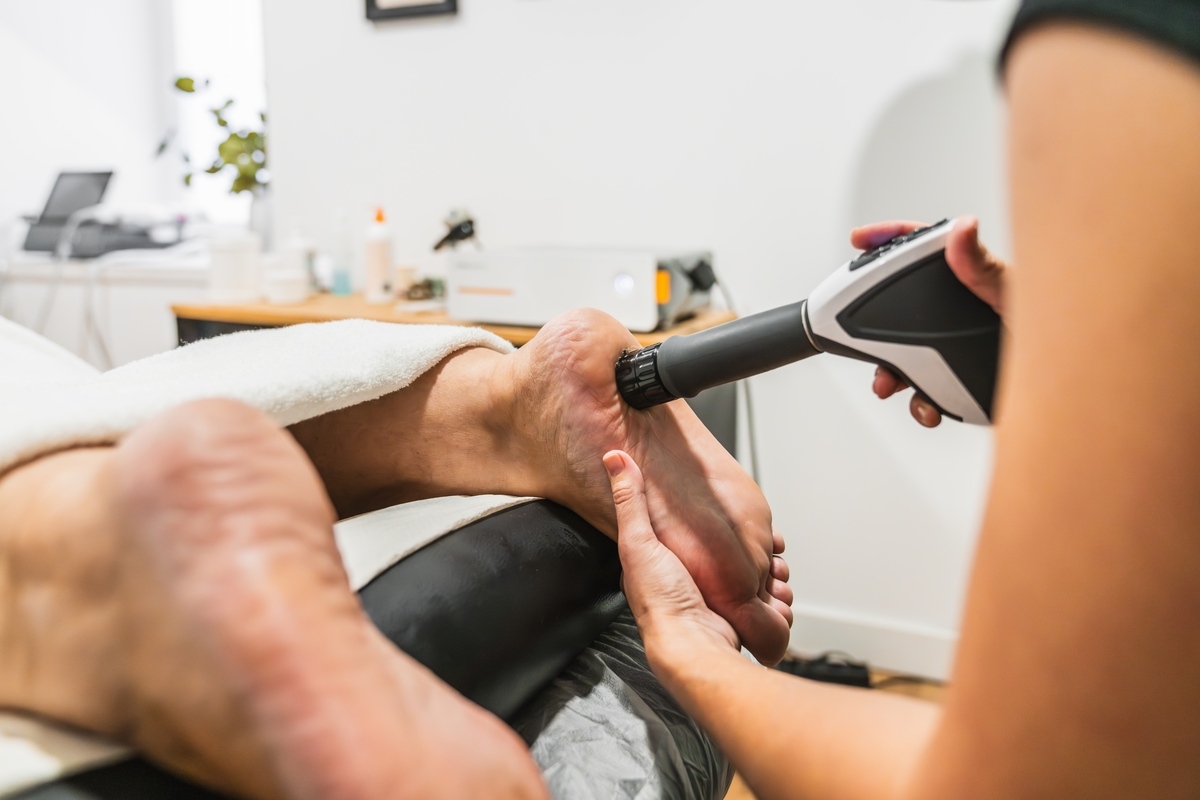
Extracorporeal shockwave therapy (ESWT) sends short bursts of pressure through the skin. Extracorporeal means the waves come from outside the body. No surgery or stem cell injection is involved.
The goal is less pain and easier movement. Research is mixed, so shockwaves are not usually the first treatment.
Focused waves aim energy at a set area. Radial waves spread outward from the skin. Results from one device cannot be assumed for another, including StemWave.
Shockwaves may be discussed after stretching, taping, and other basic care have not helped enough. Diagnosis must come first.
3. What Else Could Be Causing Heel Pain?
Nerve problems, stress fractures, and changes in heel padding can also cause pain. They may need different care.
A clinician may ask about:
Location: Is the pain under the inner heel, at the back, or across the foot?
Timing: Does it hurt most after rest or get worse the longer you walk?
Recent activity: Have you started running more or standing for longer shifts?
Other signs: Is there burning, tingling, swelling, or numbness?
Previous care: Which shoes, exercises, or other steps have you already tried?
An exam often identifies the cause. Scans may help with unusual symptoms but are not always needed.
If pain began after an injury or you cannot put weight on the foot, seek prompt medical care.
4. What Do Clinical Studies Tell Us?
Studies report mixed results for stubborn heel pain. Some show less pain, but devices, settings, and follow-up periods differ.
According to a 2024 review of 11 clinical trials, focused and radial shockwave treatments showed encouraging pain results. Trials used different doses and schedules. This meta-analysis, which combined several trials, called for better research.
According to guidance from the National Institute for Health and Care Excellence (NICE), there were no major safety concerns in the evidence it assessed, but proof of benefit was inconsistent. NICE reviews health treatments in the UK. It advises special clinical oversight, clear consent, and tracking results.
For shockwave therapy for plantar fasciitis, the evidence supports informed choices, not promises. General findings do not prove StemWave has the same results.
5. Which Everyday Treatments Still Matter?
Heel pain care often starts at home. According to the National Institute for Health and Care Research (NIHR) best practice guide, initial care should include daily stretching, foot taping, which supports the arch, and guidance on managing symptoms. Shockwave treatment may be considered if that first stage does not help enough.
A care plan may include:
Stretching the plantar fascia: Gentle movements may ease pain during first steps.
Stretching the calf: Better ankle movement may reduce strain on the foot.
Building strength: Foot and lower-leg exercises can help you handle daily activity.
Reviewing footwear: Supportive shoes may make walking or standing more comfortable.
Adjusting activity: You may need to reduce painful loads without stopping all movement.
A physical therapist can guide exercise. You can also read about why recovery after workouts may feel slow, but workout soreness is different from heel pain.
6. Questions to Ask Before an Acoustic Wave Session
Ask which device will be used and what evidence supports it. Your symptoms and medical history should be reviewed first.
Questions include:
What is the goal? Fewer painful morning steps, longer walks, or easier daily tasks?
What will it feel like? The pressure can feel like quick taps and may be sore over the heel.
How many visits are planned? Ask why that schedule makes sense for your condition.
How will progress be checked? Agree on a follow-up date and a way to measure change.
What if it does not help? Find out when the diagnosis or treatment plan should be reviewed.
If you consider shockwave therapy for plantar fasciitis, remember relief may take weeks. Exercise and other care may still be needed.
7. When Your Heel Needs Medical Attention
Sessions may cause soreness, redness, or bruising. Tell your clinician about pregnancy, bleeding risks, medicines, and other health concerns.
Do not delay a medical review if you have:
Severe pain after an injury, especially if walking is difficult.
New weakness, tingling, or numbness in the foot.
Fever, marked swelling, or warmth around the painful area.
Pain that grows worse despite changes to activity and basic care.
For general questions about the assessment process, you can contact Saltwater Wellness. A clinician can guide your next steps.
8. Frequently Asked Questions
Usually not. Stretching, foot exercises, taping, and footwear changes come first. If pain persists after a steady trial of these steps, a clinician may discuss shockwaves based on your diagnosis and past care.
No. Long-term pain may reflect tissue changes rather than active inflammation. Clinicians may call this plantar fasciopathy, but the name alone does not tell you which treatment will help. An exam can rule out other causes.
No. Focused and radial devices work differently, and treatment settings vary. A positive study of one machine does not prove every device will work as well. Ask which machine the clinic uses.
Often, yes. Shorter walks or lower-impact exercise may help you stay active. Ease back if pain worsens or starts to change your walking pattern. A physical therapist can guide a gradual return.
No. Studies of shockwave therapy for plantar fasciitis show mixed results and do not establish StemWave-specific benefits. Ask what evidence applies to the device being used and when to review progress. Relief cannot be promised.
9. Choosing a Care Plan Based on Evidence
Heel pain can change how you walk, work, and exercise. A clear diagnosis and a plan you can follow matter more than the name of a procedure. Some people improve with simple exercises, while others need more support.
Shockwave therapy for plantar fasciitis may be considered when basic steps have not helped enough. Discuss the evidence, possible benefits, and risks with a clinician. Agree on how to judge progress and what to do if pain continues.
Key Takeaways
First-step pain is a common sign. Plantar fascia pain is often worse after rest.
Heel pain has several causes. Diagnosis should come before any procedure.
Shockwave research is mixed. Some trials found relief, but results vary by method and device.
Basic care is still important. Stretching, taping, strength work, and footwear changes can help.
Specific device claims need evidence. Results from other machines do not guarantee StemWave outcomes.
Have Questions About Lasting Heel Pain?
A qualified clinician can review your heel pain and available options. Saltwater Wellness can explain its acoustic wave evaluation process, with a focus on your needs and realistic goals.
Disclaimer
This article is for education, not medical advice. Heel pain can have several causes, and treatment results vary by person and device. Seek prompt care for severe pain or injury, and medical advice if symptoms persist.